He Lay Waste A Village. And His Mother Too.

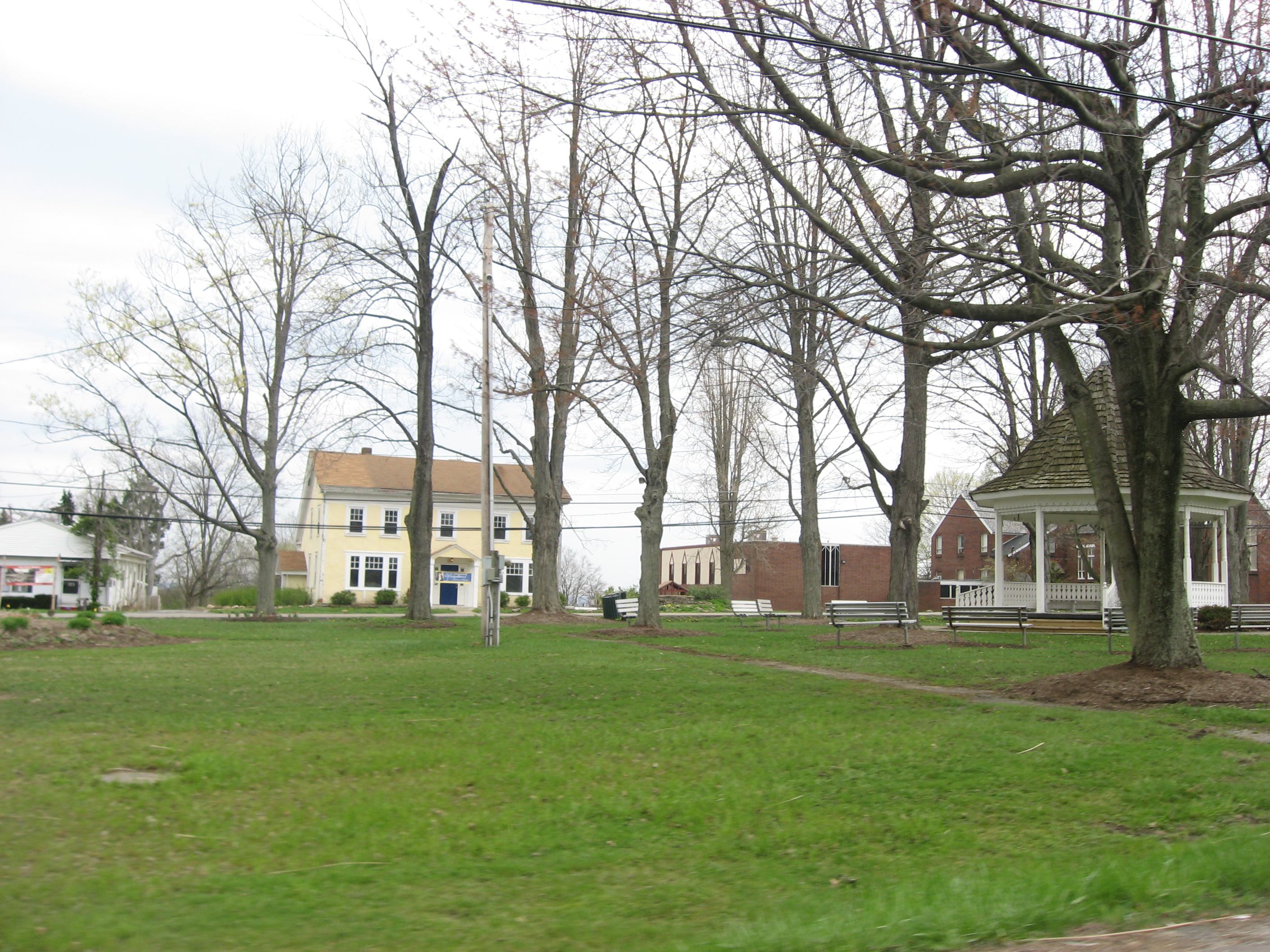
Brookfield_Center_village_greenWhen the  bloodbath smothered my awareness as I worked at home on December 14, 2012, I felt the icy rain  and despairing grey skies freeze my heart. My own children were grown. What matter. Life still feels a dangerous mine-field when you love so much. In an incomprehensible fraction of an instant, the very essence of your life can be obliterated.

I joined a nation grieving, a world, in fact.  I grasped again my personal perplexity at gun ownership, shooting for sport.  I suppose I entered with the grieving searching for a reason in those early hours, before understanding that reason and madness can never co-exist.

Soon, I was also saddened, however, as the media, the official statements and ultimately the president made a body count: “twenty six victims. “Twenty children” and “six adults” shot dead in Newtown.

His mother was a victim. Surely.  He killed her.  (And he, too, must be counted somewhere?  A human life, he lived, he died. He died with great obscenity).

On March 17, 2014, Andrew Solomon published an article in The New  Yorker, The Reckoning. In this article, and in his discussions of it on other media, Solomon, partially based on his previous writings and interviews relating to the Columbine massacre and on his interviews and research into the Newtown shootings, paints a portrait of Adam and Nancy Lanza.  He also describes Peter Lanza from these sources, mediated by Mr. Lanza and his wife’s lengthy interviews with Solomon. What emerges is another portrait of an American horror which places at its center a mentally ill young man, infantalized in many ways, raised with  deficient, provocative mothering . Mr. Solomon has extended the narrative which has alternately blamed, then erased, Nancy Lanza.

It is probably true that had Ms.Lanza and I encountered each other on a PTA committee we would have struggled to  become friends.  The chronicle of her history is as a well-heeled girl from New Hampshire, popular and successful, from an established family. She married her high school sweetheart to become a  stock broker and then stay at home mom in a posh Manhattan suburb.  Suffice it to say, my history has few points of intersection.

She enjoyed guns.  I abhor them.  She enjoyed shooting for sport.  I cannot comprehend such a thing.  She met  friends at the local bar on occasion.  I do not.  She loved her children.  That is a passion we shared.

There is little else we know of Nancy Lanza.  Did she like to read?  Did she enjoy the opera?  Did she have hobbies other than guns: cooking, gardening, knitting, painting, hiking, running?  Was she religious?  Why did she not date?  Was she in therapy?  Did she confide in the sometimes mentioned “best friend?” Did she visit her other son, or he her? Did she like to shop?

I am relieved that there is much we do not know.  Researching for this post was repellant for the intimacies of a life on view. The State’s Attorney’s Investigation necessarily examined every inch of her home, her correspondence, her phone calls, her clothing, her possessions, her life.  The parts which link her to the horrors of the morning of her death have been memorialized in cyberspace.  This is who she is.  This is the sum of her remembered life.

That and her absence among the twenty-six stars on the Newtown firehouse.  The absence of a bell toll for her on the anniversary of the massacre. The failure of a mention by President Obama when he calls on the nation to remember the slain of that day.

If the mother of the slain child,  Ana , Nelba Marquez Green, has the generosity to call for empathy and counts Nancy Lanza as a Newtown victim, I suggest we all need to do so.

I suggest we need to do this because she was a victim of Domestic Violence. This time, and not for the first time, Domestic Violence shattered a community, a nation and reverberated throughout the world.

In the immediate aftermath of her death, when the wise began to question how our society copes with mental illness, a brave and insightful woman posted an article “I am Adam Lanza’s Mother” to the relief of many frightened mothers (and fathers). The post is extraordinary especially since information  now available from the State’s Attorney’s Investigation Report was mere rumor and innuendo at that time.

Evidence suggests that Adam Lanza suffered from developmental delay mushrooming into neurological/behavioral/medical/psychological and or  psychiatric issues as he moved through adolescence and early adulthood.  Documents summarized in the State Attorney’s Report and the Solomon article conflate time.

It is difficult to distinguish which of Lanza’s faetures discovered in the middle school years were known to have spiraled out of control into his last years. Lanza’s middle school experiences appear relatively well documented by school and medical sources. Still, these records present contradictory pictures.  Some show a severely disordered  child while others indicate a quite polite one who was not even bullied at school.  In fact some of the school reports are so “normal” one wonders why there would be a reason to pull that child from school or seek professional help at all.  The child described, they note, for whatever reason, had “at least one friend.”

The apparently contemporaneous professional reports herald lurking danger. At this juncture, the question most respectfully arises, where is the village? Certainly this is not a victim blaming exercise.  It is a genuine inquiry: to what extent do we as a community have a duty of care to our members, our children, to offer support to those so obviously struggling?

People question, “How could she not see?” “Why did she not get help?”  People who have never met the family sit in judgement.  “Many  parents, perhaps most, have to find the balance between devotion and denial… Nancy Lanza failed.” states Ruth Marcus, of the Washington Post definitively. Many condemn the deceased woman for what she failed to see or do which can be pinpointed so precisely in hindsight. But, none of these people were present in Nancy Lanza’s life as she was coping with a disordered, adult son.

Nor does it seem there was a large support system for Ms. Lanza when Adam was still a minor.

I would hope that if I were home schooling my child because he experienced, as Solomon states, “sensory overload” and “panic attacks” at school, or if my child was enrolled in  “special classes”, there would be a teacher, social worker, child welfare worker overseeing my tutelage to ensure that I was providing the necessary services.  I would hope that homeschooling, an alternative for creative, enriched learning, is not also being used as on “out of sight, out of mind” method to unload the system of its responsibilities to children with special needs. Newtown tragically demonstrates how  special needs belong to the community not merely to the child.

I trust that if my neighbor’s child had an “episode” in school, the authorities would call paramedics as well as the parent.  I would hope that child would not disappear into the care of a single parent who could be bewildered and overwhelmed.

I expect schools would refer my grandchild to physical or occupational therapy if he exhibited coördination difficulties and extreme fine motor concerns to prevent a teenager from lacing  his shoes.

And I wonder if there is not a professional duty lying outside the family.

If  a child diagnosed with a disorder or condition which substantially impairs his ability to take part in life fails to receive recommend treatment, ought there not be follow-up to ensure the welfare of the child is protected?  Certainly, we can imagine a scenario where an impoverished parent refusing medical recommendations and failing to assist a child to socialize “normally” might risk the actual legal custody of the child. That child could be institutionalized.  Is it wealth which buys the privilege of privacy to leave a child inadequately treated?

A panel video discussion on “I am Adam Lanza’s Mother.  Sories from the Front Line” on The Huffington Post in 2012 considered this lack of “village cooperation.” The Lanzas shared with other families the problem of having a child difficult to pigeonhole into  “diagnoses” in a DSM label-driven mental health care system.

Many families struggle with children who  are described by their loved ones as  “brilliant, loving and amazing” and also “volatile, disruptive and explosive.”  It is not so rare that a parent comes to fear an explosive child, particular a child who grows larger or stronger than the parent. Compassionate people describe these children as “needing to develop past their behavior issues.”  Or, as one parent suggested, needing structure which would provide the “scaffolding the brain required to develop. ” Many times this special attention is gained in therapeutic school settings or day schools for special needs students.

The evidence does not suggest that the experts or school systems ever recommended such placement options for Adam Lanza. The Lanzas considered and rejected “private school” except for a brief time in which Adam attended Catholic School. Neither is there a suggestion that either Peter or Nancy Lanza considered a therapeutic home or a special school at critical stages in Adam’s youth.

It appears that Nancy Lanza was the “primary parent” for her sons as they grew.  Peter Lanza told Solomon that he considered that his relationship with his sons hardly changed after the separation from them in 2001 since he had always worked “ridiculously long hours.” Adam was 9 years old.  Apparently, Ryan and Adam lived with their mother. Peter Lanza lived a commutable distance in Stamford, keeping a cordial relationship with mother and visiting his sons on weekends.  He chose to remain involved in schooling and medical concerns.   The parents together participated in Adam’s development into a young man with a sense of humor, a fascination with World War II and a nascent wish to join the military.

The family engaged in gun activity.  Much has been reported about mother’s taking Adam to NRA shooting classes and to a shooting range.  Documents evidence that father took his son shooting as well.  An undated birthday card also evidences a promise from father to Adam to do the same when he next saw his son.  This was apparently after Adam had stopped visiting his father and suggested as an inducement to resume visits. Many are  incredulous that anyone voluntarily keep a gun and ammunition near a person as apparently disturbed as Adam Lanza.  In Solomon’s interview, Peter Lanza is critical of his deceased wife for several things, but  he absolves her for this, stating she would not have done so had she believed Adam to be violent.

According to Solomon, Peter Lanza is a man in need of precision about facts.  One might question why he did not quest for more precision as to the source of the clear suffering of one of his sons.  He is described as a “docile parent.”  Solomon portrays Peter Lanza as  an “affable,” successful, executive accountant not prone to examining emotions. This lack of understanding of or insight into the emotional world could have been something the man passed on to the boy.   Even as I write these phrases, bordering on, if not crossing, a line of psychologizing a person I have never met and never will meet, I cringe.  Yet such long distance analysis has been the posthumous fate of Nancy Lanza.

What emerges from Solomon’s article and the State’s Attorney’s Investigation Report is a portrait of a woman entrapped in a solitary and isolating relationship with her son.  No evidence exits to confirm that this relationship was physically abusive before December 14, 2012.

On that date, the domestic abuse which had controlled her life morphed into murder. Peter Lanza’s weekend contacts with Adam ceased after his son obtained a driver’s licence and a car in 2010.  Peter Lanza told Solomon that around that time Adam displayed no violent or aggressive tendencies in any way despite a “fascination with mass shootings and firearms.” Mr. Lanza had concluded after two years of not being in contact with Adam in any direct way that “It was crystal clear something was wrong” before the murders happened.  Still, on Adam’s last birthday, father did not force a visit to his adult son because, essentially, he knew it would involve a fight and he chose not to make a public scene. Without judging any of those facts, it is crystal clear that Nancy Lanza had no help caring for Adam’s escalating needs through immediate family.

Whether she had any help at all is not established. Solomon’s research and Peter Lanza’s report confirm the impression given by other documentary evidence that the older Adam grew, the less space Nancy Lanza experienced for her own life. According to these sources, as early as age 14, an obsessive adolescent was directing his compliant mother to join him in refraining from touching metal surfaces.  He issued other demands which were reportedly obeyed by his mother: he dictated what shoes she could where and how heavily she could tread; he considered it “inappropriate for her to “lean on” kitchen counters; he directed where she could walk in the kitchen and she agreed to get him computer parts so he could hide his cyber imprint.  Prescribed medication caused disabling side effects and was discontinued without substitution.   Adam’s other compulsions increasingly affected his mother’s life:  he was restrictive in what foods he would eat and how food could be arranged on a plate so that food items could not touch each other; his clothing needed washing several times a day, a demand with which she complied.  In addition, Adam was directing which rooms in the home sunlight could enter, who could ring the doorbell and  when and other factors which affected his sensory peculiarities.  Nancy could offend and enrage Adam or she or some other stimulus could send him into a catatonic depression or uncontrolled weeping  at the slightest misstep.  Eventually communication between them appears to have been limited to email, with Adam often unresponsive.  Nancy Lanza chose to live in such a fashion with her adult son.

Immediately before her death Ms. Lanza confided to someone that she expected to live with Adam for “a long time.”

In domestic violence, the abused often seeks the approval of the abuser.   The intimate nature of the relationship between the two magnifies the “power and control” features of the relationship.  The fact that the victim is the mother of an abusive son can mean her entire identity – am I an adequate mother, a worthy person – is compromised by the abuse.  Feelings of shame can prevent an abused family member from reaching out for help.  As can feelings of powerlessness.

Parricide (child murder of a parent) is not a widely studied form of domestic violence. Unfortunately, it happens. Research suggests that this form of domestic violence is associated with  a victim surrendering the role of an adult within the family.  As she does so, she experiences increasing feelings of isolation.  Because of the shame associated with this form of abuse, she may increase her own isolation.  Generally, there is  lack of information about lethal, non-lethal physical and/or emotional “child on parent” abuse (except perhaps in cases of the elderly which may have different dynamics).   This lack of information can explain the lack of community resources for the prevention and treatment for families with this type of dysfunction.

In the case of Newtown, it is also useful to examine our cultural experience of family violence.  Especially in recent years, the parentified child is a feature of television and movies but also common in the literature and other media of the times.  This social reinforcement of  weak parent models is harmful.  Certainly children are due respect and participation within families. However, current research suggests that confusion of family roles is unhealthy and a potential breeding ground for violence. In addition, the same media continues to exalt violence especially for and to males.  We raise our sons in a world filled with pressure for them to meet social expectations to be “tough.”  Studies reinforce instinct that this media messaging can contribute to  “accumulating aggression in male children.”

Peter Lanza told Solomon he was troubled Nancy Lanza “lied” to him that Adam was getting better. (A review of the States Attorneys Report does not necessarily support Mr. Lanza’s conclusion on this point.) He also suggested: “Nancy’s pride prevented her from asking for help.  She wanted everyone to think it was ok.”

True, pride is the opposite of shame.  A glass half full.  A glass half empty.

Shame is a major impediment to a victim’s seeking help.  Blame reinforces of shame.  A community must have available and known resources for a victim before she can seek relief. There is no evidence that Adam Lanza was violent towards his mother before December 14, 2012.  In fact, evidence fails to confirm that he was violent towards anyone. But the evidence does suggest that Nancy Lanza was, as one professional stated in Solomon’s article, increasingly “becoming a prisoner in her own home.”  She was engaged in a downward cycle of emotional abuse of the most dangerous kind for all concerned.

What puzzles me is the poignant fact that in the hours before her murder, Nancy Lanza gave herself a holiday at a mountain spa. She cooked meals her clearly food-disordered son likely did not eat.  He apparently functioned independently  while she was gone, although his destruction erupted upon her return.  She had purchased an RV and was making plans to move away, start a new life in a new state for her son at a new school. What gave her the strength for these changes?  How did she muster the courage to leave behind the person who apparently dominated her every waking moment?   How could she free herself from that control…and then return?  What gave her the strength, energy and hope to plan a fresh start?

Solomon suggests that this very step – affirmatively planning to move into a different future – may have been the seeds of her destruction. She could have angered Adam with her recognition that she would live with him “for a very long time”; Adam was a young man craving independence.  As the collected evidence shows, he was also utterly incapable of such independence. Peter Lanza states he was distanced by the” intensity” of the Nancy and Adam’s relationship, though there was nothing problematic in the “nature of ” the intensity itself.

Solomon suggests that unreferenced reports on matricide indicate  it is a crime committed by “overprotective  sons” who wish to “free themself from their dependence. ”  Matricide is employed in these overly dependent, conflict laden relationships.  The perpetrator ‘s mother tends to be smothering, the father, distant, passive.

The  literature I studied suggested that matricide, a subclass of parricide, is most often committed by males aged 12-25, less often committed with guns.  It is a crime of domestic violence, often correlated with schizophrenia, severe depression and suicide.  It is a lashing out of extreme rage, usually pre-planned, a concomitant with suicide. It is the “desperate act of severely ill and inadequately treated mentally ill” people. As I discussed, studies suggest that a  disintegrated family structure, unassertive parents and a  child experiencing  a lack of leadership are risk factors.    As with all violence, matricide is a crime of power and control.

Murder victims are not generally blamed for their own slaughter.  Certainly not when they are shot in the head four times in the early morning  in their bed in their own homes.

Nancy Lanza was blamed, belittled and forgotten.

It gets easier every day to turn away.  Our children spend more time “online.” We  can skype into town meetings or get the minutes online.  We don’t even have to go to town or the mall to shop anymore.  It will come to our door. But, the door closed on the house beside us can still shelter people in pain.  Hollywood may have us dreaming about perfect operating systems as mates, but the world is still filled with flesh and blood folks with gladsome and mournful hearts.  We can choose to divorce ourselves from the reality that our neighbor’s world affects our own.  But that will not alter circumstance.  Sooner or later we must accept that we live in a  village after all.
Its Saint Patrick’s Day and A Birthday Too!


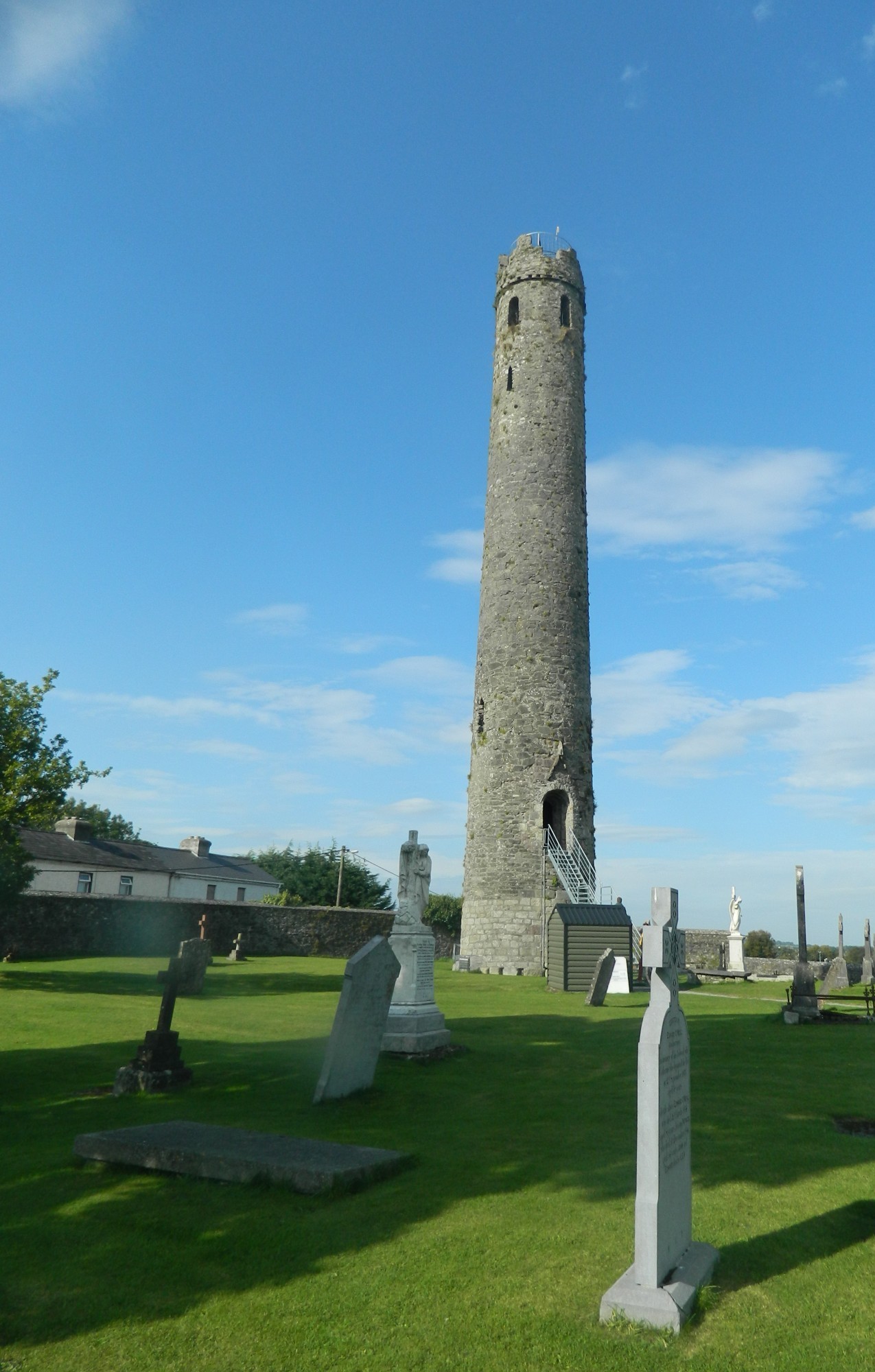
cropped-cropped-cropped-dscn0267.jpgToday is Saint Patrick’s Day.  It is also the day I celebrate my birthday.  I would do this somewhat diffidently since the usual response to this fact is “How wonderful! You are Irish and born on Saint Patrick’s Day!”  At the age of sixteen, I discovered evidence which strongly suggested that my Irish immigrant parents concocted this coincidence in the twilight moments of March 16th of my birth year.  Perhaps in so doing they gave birth not only to a joyful yarn but also to a child who herself never understood the necessity of the strict boundaries of convention.

Despite teenage angst that invariably would accompany the discovery that one’s very date of birth was not what one thought it to be, I have very happy memories of the Saint Patrick’s Days of my life.  Only now I understand that my parents, and most especially my mother, were “Irish cultural puritans.”

I received an email from my Dublin cousin today titled, “Happy Saint Paddy’s Day”, only to wince.  I could hear my mother saying in her stern but nonetheless musical voice “Its Saint Patrick’s Day, for God’s sake, why is it so hard to say a Saint’s name properly?”  I was taught that “Paddy” was an old British racial slur, much like many of the racial slurs we abhor in the United States which evolved against the poorest classes who were actual or defacto slaves.  A paddy was possibly little better than an animal, ignorant, dirty, superstitious, sexually irresponsible, unhygienic, drunken, lazy, dishonest and stupid. This was the paddy under the British thumb.  The paddy in the “new world” eventually evolved to shed some of these ethnic badges as he climbed into the working classes as a fire worker, police worker, plumber, carpenter, municipal worker or unionist.  I remember the bemusement when I once suggested to a colleague that Paddy wagon was an ethnic slur.  I wasn’t entirely joking.

It was somewhat enchanting to be a little girl spending birthday evenings in happy halls performing Irish dances,lyrical voices mixing with laughter and sentimental song.  I recall the smell of beer and whiskey, but I genuinely do not remember drunks.  There were never green hats, green neon suits, green beer and the shamrocks were real, living plants relatives imported from Ireland.  Happy Birthday was often sung to me while I was sitting on my father’s lap, itchy and sleepy in my green wool dancing costume.

But what I remember most about my childhood Saint Patrick’s days are the quiet times with my mother.  She allowed me to stay home from school on my birthday and it was often just the two of us alone together.  Although March was meant to herald Spring, Saint Patrick’s Day was most often a day like today is: brisk, windy with intermittent clouds and sun, snow flurries surprising us at intervals.  My mother and I would walk outside, maybe purchase some Daffodils at the Penn Fruit, and with rosy cheeks, holding hands return to the house perhaps after attending mass at Saint Alice’s, embracing the warmth with a hot drink and a sandwich.  My mother would make brown sugar candy when we were alone together.  Saint Patrick’s Day Dinner was usually a turkey dinner with Irish soda bread and vegetables. And of course Birthday Cake.  Store Bought.   While everything was cooking, we might take a nap on the sofa, lying head to feet, feeling “cozy” and safe.

My mother never “approved” of the Americanism of wearing green on Saint Patrick’s Day.  “You are real Irish.”  She would say.  “You don’t have to wear green.”  She never tasted a drop of alcohol to the day she died.  My mother scoffed at the “traditional meal” of corn beef and cabbage:  “I never tasted corn beef in my life!”   Often a contrarian, she denounced the March 17 festivities of the Americans as “disgusting.”  As long as she was able,  she celebrated her Saint Patrick’s Day as a quietly, religious moment, embracing her culture and faith as she  had in her beloved Donegal.

This time of year, as the season turns restless, I long to spend another March day with my mother.  I am finally thankful to my parents for their old conspiracy late, late one March 16th.  For by their creative paperwork, they provided me with experiences and memories I treasure and make annually revive.

Ban Bossy? Think again!


cropped-cropped-girls_in_the_garden_oil_c-1906_frank_weston_benson2.jpgIt appears to be that some people attract controversy as metal rods attract lightning.

Sheryl Sandberg, author of Lean In, appears to be one such person. The response to her March 8, 2014 Wall Street Journal Op Ed co-authored with Anna Maria Chavez, Girls Scouts USA, CEO has been vigorous. Ms. Chavez and Ms. Sandberg advocate banning the word “bossy” as applied to girls through a pledge campaign and to engage in other activities explained on a website banbossy.com.  These leaders reach into their own history and into the etymology and semantics of the word bossy.  Their conclusion is that this “B” word heard so often on the childhood play yard, in the classroom, and even in the Boardroom, Courtroom, or Senate Chamber is a social signifier.  It is a word which connotes deeply rooted negative gender stereotypes of women who exhibit competent leadership skills.  A bossy man is to be admired as a leader.  A bossy woman, no matter how successful, is somehow unlikable. A boy or man in charge is acceptable.  A girl or woman who is not kind and nurturing is deficient. Girls suffer, we are told, from these stereotypes, lose confidence, and fail to thrive in the race to the top.

I have no reason to disagree.

In my once male dominated profession of law, it was a good day if the “B” word directed toward me or a female colleague was “bossy.” Each of us have reached into our childhoods and told tales of how we were discouraged by the language of gender stereotypes. Each of us observed that a male lawyer who was a vigorous advocate was “able counsel” or something more superlative.  A woman conducting herself in an identical fashion was likely to be many things, perhaps “bossy” would again be the kindest.

Nor do I diminish the significance of the observations and goals of banbossy.com.  Reinforcing a child’s self esteem is crucial .

Chavez and Sandberg suggest that being bossy can help us live fulfilled lives:” The lesson to children, and to the parents and teachers who raise and nurture them, should be that there is pride in being opinionated, motivated and motivating—that is, bossy.”  (March 8, 2014 Wall Street Journal Op Ed).

My question is more basic.  Why do we need anyone to be bossy?  Motivated, Motivating, Opinionated…..

The starting point in the argument of “Ban Bossy” (the website indicates that this is not a first amendment issue: there is no literal request to abolish a word) accepts the current definitions of “success” of the upper middle class (or higher), highly and well-educated, corporate, largely white, world. The little girl labeled bossy raises her hand too much, tells her friends how to complete the project, seeks out the highest class office. She is the kid who joins all the clubs, has more time for events than for friends, she gets the best grades,  and often she is “good” at everything, from music to sports.   She grows up to be Margaret Thatcher or Hillary Clinton. When she is a known world leader, she is not called bossy; she is called cold, unfeeling or mean, and nasty.

What if we changed not merely the word, we changed the narrative.  The child who gets the highest score on the math test or read the most books over the summer is a success.  But the child who exhibits such emotional intelligence that at lunch she sits next to the little boy who doesn’t speak much English is also a success.  The girl who stands next to the child whom the class bully just disparaged is a success too.  And the one who built a bird house from twigs in the yard is counted among the winners.

If the narrative is altered to include a more diverse vision of “success,” diversity in “motivation” and in methods to motivate others might readily follow.  An Ivy League level education is no longer the pre-requisite to being a “success” in the chosen profession.  Columbia does not even have a Carpentry Department!  When the narrative changes and the means to motivate change, perhaps, the dialogue can also be altered.  “Being opinionated” might no longer be of such high value.  Listening skills, engaging in a meaningful dialogue which moves participants forward might become paramount.

Maybe I am an idealist.  I remind myself of a young woman I knew well when she was me in Women Studies Classes in the 70’s.I thought by now an equal society would have evolved.  Banning words was not a strategy I recall considering.

We anticipated a future wherein boardrooms, courtrooms and senate chambers were open to us.  We even believed a woman would be elected US president.  We considered a future wherein the choice to become a cook or a weaver or a teacher would command financial and social respect.  We read the futuristic novels of feminism’s “first wave” and believed that under our watch child care providers would garner wages which truly reflect the importance of the work performed, the provision of healthy food would be honored, the work of the homemaker would be valid.

Most critically, as our political consciousness grew, many of us began to prefer the attribution “feminist humanist.”  We professed freedom for women necessarily required the same for men. The evisceration of gender stereotypes, or so the argument proceeded, would mean that women could embrace power and men could embrace emotion. In a practical fashion, we sought equal work and life partnerships.  We marched into parenthood armed with the determination that we would talk with our sons about their dreams and feelings and bring our daughters to sports events and political rallies.  Even better, we would seek out the individuality in each of our children and cultivate that precious gift as best we could  regardless of gender.

Decades on, the world is much changed, in many respects to the detriment of the economic, social and political status of women in the US. The ban bossy campaign is started.

Perhaps, the study of conflict resolution and bully prevention strategies has led me to hopes which amplify  earlier ideas as to how to reach  a more equal society in terms of gender.  Banning words is still not a strategy.

Achieving social justice on a real level for women, girls, men or boys demands more than caution with words.

If we continue drowning our daughters from the earliest stages in marketed images of “perfection,” the anorexic, sexualized teen, the air-brushed, perfectly coiffed Kate-Middleton clone mom, words, no matter how pernicious, count little in the construction of gendered stereotypes.  If our films persist in featuring suicidal astronauts or depressive narcissists as leading role models for women even when women of wealth are acquiring a greater voice in what movies are being produced, we must look to new forums.

If these same vehicles persuade our boys that violence and vulgarity are hallmarks of manhood, youth will be trapped in an endless cycle of diminished fulfillment.  If our role models for male success continue to be styled as “tough on the outside, tough on the inside,” men will struggle within roles which inhibit most, limit many and completey exclude more than a few.

So long as we persist in defining our world as full of “winners” and “losers”, our schools will instill confidence in some and a sense of inferiority in others.  So long as we accept a society in which it is a norm that some children will go to bed hungry and some seniors will freeze to death impoverished on city streets, intolerance is almost a necessary aspect of our culture.  If we equate being “opinionated” with leadership we are failing to teach essential listening skills which alone offer us access to understanding.  Understanding the point of view of the other is the only true benchmark of the kind of growth which allows for leadership.  As we see in the world around us, one can easily bark at and boss the converted and lead them into an impasse.  Progress and growth demand more.

Chavez and Sandberg must be applauded for identifying issues which must be addressed.  They may be commended for developing a strategy.  If they are the leaders they contend they are they must continue thinking.

Initially posted at BeaconResolution.com

Remembering Judy

cropped-dscn0087.jpgMy friend died last night. I love her as I never loved a sister. She suffered a unfathomable illness with dignity and discretion for too long for me to say I am surprised today. No warning could ever have been enough to numb the pain of loss which follows the end of her ordeal.

I trusted Judith’s incredible wisdom.

The Dream

O god, in the dream the terrible horse began

To paw at the air, and make for me with his blows,

Fear kept for thirty-five years poured through his mane,

And retribution equally old, or nearly, breathed through his nose.

Coward complete, I lay and wept on the ground

When some strong creature appeared, and leapt for the rein.

Another woman, as I lay half in a swound

Leapt in the air, and clutched at the leather and chain.

Give him, she said, something of yours as a charm.

Throw him, she said, some poor thing you alone claim.

No, no, I cried, he hates me; he is out for harm,

And whether I yield or not, it is all the same.

But, like a lion in a legend, when I flung the glove

Pulled from my sweating, my cold right hand;

The terrible beast, that no one may understand,

Came to my side, and put down his head in love.

Louise Bogan from PoemHunters. com

She loved Jane Austen. The wonderful charm, wit and humor of Austen was shared by Judith.

I’ve a Pain in my Head

‘I’ve a pain in my head’

Said the suffering Beckford;

To her Doctor so dread.

‘Oh! what shall I take for’t?’

Said this Doctor so dread

Whose name it was Newnham.

‘For this pain in your head

Ah! What can you do Ma’am?’

Said Miss Beckford, ‘Suppose

If you think there’s no risk,

I take a good Dose

Of calomel brisk.’–

‘What a praise worthy Notion.’

Replied Mr. Newnham.

‘You shall have such a potion

And so will I too Ma’am.’

Jane Austen PoemHunters.com

Hours of conversation with Judith about the pitfalls of blind faith and the foundations of rationalism enriched our friendship.

“Faith” is a fine invention

185

“Faith” is a fine invention

When Gentlemen can see—

But Microscopes are prudent

In an Emergency.

Emily Dickinson  PoemHunters.com

Even into the months of her illness, Judith and I enjoyed sharing the names of good books and even good awful books! Though the years, her crackling fireplace on a cold afternoon in the Vermont light or the gently rocking boat moored on a summer day were wonderful seats to enjoy literary companionship.

A Book

There is no frigate like a book

To take us lands away,

Nor any coursers like a page

Of prancing poetry.

This traverse may the poorest take

Without oppress of toll;

How frugal is the chariot

That bears a human soul!

Emily Dickinson    PoemHunters.com

From my days as an “angry young woman” filled with an undirected sense of confusion at life in an unjust society, Judith spoke a language I admired and understood. She could flash out in anger. She had personally seen the destruction which the paranoia of power, anti-Semitism and greed wreaked upon a life. Generally, however, Judith advocated justice by living. When she took up a cause, she did so with grace and rational argument. Her passion for justice sparkled in her eyes. She taught me to understand and articulate what I had previously only felt. She taught me to feel that which I might unthinkingly articulate. Judith and I shared frustration that we seemed to be continually revisiting the same issues with little lasting progress. A rational realist, Judith continued her advocacy despite such incremental change.

As I Grew Older

It was a long time ago.

I have almost forgotten my dream.

But it was there then,

In front of me,

Bright like a sun—

My dream.

And then the wall rose,

Rose slowly,

Slowly,

Between me and my dream.

Rose until it touched the sky—

The wall.

Shadow.

I am black.

I lie down in the shadow.

No longer the light of my dream before me,

Above me.

Only the thick wall.

Only the shadow.

My hands!

My dark hands!

Break through the wall!

Find my dream!

Help me to shatter this darkness,

To smash this night,

To break this shadow

Into a thousand lights of sun,

Into a thousand whirling dreams

Of sun!

Langston Hughes  PoemHunters.com

Judith appreciated diverse expressions of art, music and culture. We shared this as well.

I think over again my small adventures.

My Fears,

Those small ones that seemed so big

For all the vital things

I had to get to and to reach;

And yet there is only one great thing,

The only thing,

To live to see the great day that dawns

And the light that fills the world.

(Innuit poem, 19th century)

Judith turned to music and natural beauty when facing some of her own great losses in life and the darkest of her days.

I Am in Need of Music

I am in need of music that would flow

Over my fretful, feeling fingertips,

Over my bitter-tainted, trembling lips,

With melody, deep, clear, and liquid-slow.

Oh, for the healing swaying, old and low,

Of some song sung to rest the tired dead,

A song to fall like water on my head,

And over quivering limbs, dream flushed to glow!

There is a magic made by melody:

A spell of rest, and quiet breath, and cool

Heart, that sinks through fading colors deep

To the subaqueous stillness of the sea,

And floats forever in a moon-green pool,

Held in the arms of rhythm and of sleep.

Elizabeth Bishop

The solace which Judith found allowed her to continue her life of incredible achievement and genorosity. She lived each day expecting little but demanding from life the civility, beauty and joy which her world could give. She gave of herself what she demanded of others.

“Hope” is the thing with feathers

254

“Hope” is the thing with feathers—

That perches in the soul—

And sings the tune without the words—

And never stops—at all—

And sweetest—in the Gale—is heard—

And sore must be the storm—

That could abash the little Bird

That kept so many warm—

I’ve heard it in the chillest land—

And on the strangest Sea—

Yet, never, in Extremity,

It asked a crumb—of Me.

Emily Dickinson    PoemHunter.com

Judith’s body betrayed her subtly at first, then loudly, creully, and finally vicously.

The Moment

The moment when, after many years

of hard work and a long voyage

you stand in the centre of your room,

house, half-acre, square mile, island, country,

knowing at last how you got there,

and say, I own this,

is the same moment when the trees unloose

their soft arms from around you,

the birds take back their language,

the cliffs fissure and collapse,

the air moves back from you like a wave

and you can’t breathe.

No, they whisper. You own nothing.

You were a visitor, time after time

climbing the hill, planting the flag, proclaiming.

We never belonged to you.

You never found us.

It was always the other way round.

Margaret Atwood

Flying Inside Your Own Body

Your lungs fill & spread themselves,

wings of pink blood, and your bones

empty themselves and become hollow.

When you breathe in you’ll lift like a balloon

and your heart is light too & huge,

beating with pure joy, pure helium.

The sun’s white winds blow through you,

there’s nothing above you,

you see the earth now as an oval jewel,

radiant & seablue with love.

It’s only in dreams you can do this.

Waking, your heart is a shaken fist,

a fine dust clogs the air you breathe in;

the sun’s a hot copper weight pressing straight

down on the think pink rind of your skull.

It’s always the moment just before gunshot.

You try & try to rise but you cannot.

Margaret Atwood

Judith did not lose her gift of friendship, her ability to love, her acute and precious mind.

Love is Not All

Love is not all: it is not meat or drink

Nor slumber nor a roof against the rain;

Nor yet a floating spar to men that sink

And rise and sink and rise and sink again

Love cannot fill the thickened lung with breath,

Nor clean the blood nor set the fractured bone;

Yet many a man is making friends with death

Even as I speak for lack of love alone.

It well may be that in a difficult hour

Pinned down by pain and moaning for release,

Or nagged by want past resolution’s power,

I might be driven to sell your love for peace

Or trade the memory of this night for food.

It well may be.  I do not think I would.

  Edna Saint Vincent Millay

At the end, it was excruciating for all.

No Choice

Six foot mounds stalk the fields

of frozen grass. Shrouded disc of moon,

almost full, lights the greying snows

which have lain too long under the veil of smoke.

The steady click, click, click of rain

splinters the silence of the February night.

Breathing, I am burned by the sharp 2 am air.

Too hard, too hard, too hard: say this will not be.

The kitchen at this hour blankets me in warmth.

The flames leap and dance to cast a glow about the room.

Seated in the settee I close my eyes,

No thing remains unmoved by the swaying world within.

Too quick signals from the brain are sent, collide.

Nausea, panic, rage propel me once more through the door,

Gasping in the dimness and the cold as if rising from the sea.

Too hard, too hard, too hard: say this will not be.

Across the road, a still doe looks towards me.

Her beauty is contained briefly within the night.

Suddenly, she vaults forward in the darkened world

that consumes the graceful form as though there had never been

so beautiful a creature; an anticipation of perfection;

the fulfillment of a dream, the incentive for improvement.

The space where the doe had stood survives emptied.

Too hard, too hard, too hard, too hard.

In the absence, in the loss, there is the feeling of so much unsaid.

When We Haven’t Said Goodbye

It’s the chance we did not have,

that metered stroke of a second before we knew

you were leaving, its luminous hand

unscathed by effort in the reigning darkness

like the sand in the hourglass our fist

could not keep from seeping into the lost

and forgotten. The moment was not ours.

The moment we would not have imagined,

borrowed briefly and returned to oblivion

in the aria of chimes played

by the mantel clock on the hour,

or in the wet glimmer of a kiss that we blew

into the open space we never

would have entered, telling us it’s over,

or in the grief of leaving a single word behind

had we said goodbye in time.

Joanne Monte  PoemHunters.com

In the end, however, I mourn the loss of Judith. Driving in the car, listening to music, I see her, suddenly, years ago, smoking a cigarette, I feel a physical pain. I awake at night remembering her patience choosing cobbed corn despite the heat on a summer day, how I admired her graceful movements. I look at a photograph of a family celebration, see her smile. The tears that fall are because I will never hear that laugh again.

A friend like Judith does not enter a life too often. You are foolish if that friendship is not treasured. I have no sadness for days past that might have been. I struggle only to understand how we move ahead without her.

Realizations in Black and White


I love film.  I love watching films in a nice theater with deep comfortable seats and equipped with an audio system that will allow the soundtrack to encircle me.  I have found films healthy food for my intellect, enhancing for my literary sense, challenging for my mind, directing for my reading.  But I can recall few  films that can begin to meet the power or the challenging intellectual and emotional impact of   Fruitvale Station.

If you had asked me before I entered the theater whether I was aware of racism in our society, I would have said, quite reflexively, in fact,  “of course.”

However, driving home after watching the power of this film, I recalled what had seemed to me at the time an embarrassing, but not so important incident. Leaving a medical facility while under the influence of anesthetic after a medical procedure, I was assaulted by a man, although not injured.  When I reported the incident to the facility staff, the first question posed:”Was he black?”

I did not realize then that because I did not query back, “Why, does it make a difference?” I was complicit in a racist exchange.

In many discussions, in many places, at many times, I might have posed as a person who had special insight into “the race question.”  I might have told you that I learned about white privilege early when I attended a 1% white elementary school in West Philadelphia.  I probably would have shared how it was through the indiscriminate brutality of the nuns towards the children of color and their simultaneous treatment of the white children as “special,” that I saw the ugly face of racism and the embarrassing privilege of being white in the U.S.   I possibly might have   recounted my early experience of friendship with black children, exchanging and sharing snacks, believing this represented my own surmounting of our society’s racial divide.  Or I might have opened up about the magical friendship which I shared with my best friend in college, Sheena.  Sadly, this friendship was lost in those politically charged days of the late 1970s  when  identity politics was such a personal struggle.  Measuring identity as a black woman and its room for friendship with white women took a terrible toll,  yet this was one of the tasks which could become paramount in our young world where we claimed, “the personal is political,” convinced that we understood.

If you had asked me about racists, I most likely would have told you about my family of origin:  Irish immigrants and their offspring who spouted hateful statements as the civil rights struggle, the assassinations, the legal changes unfolded before our eyes as I grew up in the 1960’s.

Yes, I  was quite comfortable with that my liberal credentials allowed me understanding of the “race question” in the United States.

Not anymore.  Not after experiencing Fruitvale Station.

The film has been criticized by bastions of conservative propaganda as “whitewashing” the factual life of Oscar Grant, who was executed by a white Oakland police officer in 2008.  This criticism is almost the point.

Fruitvale Station bases its plot on the life of Oscar Grant the day before he was murdered.  It is implicit in the film’s action that we cannot know whether every word uttered, every embrace exchanged, each flash of anger, each moment of kindness is “real” or fictional.

We have learned that fifty people can witness the same event and report it entirely differently.  Do we not understand at the very least that one person’s honest statement of fact can differ dramatically from that of another?

What matters in this film is not that this WAS the last day in the life of Oscar Grant, but that this could have been the experience of Mr. Grant or any one of the young black men sacrificed on the United States’ altar of racism.

As I watched the film, I slowly traveled a path of new awareness as to how white supremacy infiltrates the life of a young black man, his family, and his friends.  From the fear he sees in the eyes of a white woman whom he addresses without knowing her, to the realization he accepts that for an unconnected, disrespected young black male, there will be no second chances, I saw reflections of myself, my family, my friends.  The search for a greeting card with black faces, while perhaps a cliché, in this film is a moment of transcendent understanding.  The image of a dead pit-bull is heartbreaking as we  comprehend that we are often easily aroused to sympathy for abused animals even as we are reluctant to engage in a conversation about the depth of the racial divide.

Perhaps most stunningly the film moved my consciousness from the screen to the theater.  Here, the audience for this film in an upscale art house theater was at least 50% people of color. Never before had I shared a film experience with such a diverse audience in this cinema generally populated with white, urban film buffs.

Ultimately we are left with a true image, that of Oscar Grant’s child.  It is this achingly poignant image that testifies to the truth of this narrative.  In the child’s face, we see pain passed on to another generation that will struggle in a society ravaged by a humiliating racial history.  The natural movement of her eyes escaping the camera affirms that it matters not whether Oscar Grant in fact decided to “go straight” the day before he died.  It matters only that, as real-time video captured in this case, a young black father was targeted to the exclusion of any white train riders. He was accused of crime based on the color of his skin, what that skin color means to whites. What matters is the brutality that was witnessed and tolerated by hundreds of onlookers who lacked the courage to intervene.  What matters is the shot that ended another life which had limited chances to change the narrative he entered at the moment of his birth.

I left that theater with a sense of shame. Shame at my skin color, shame at my middle class life, shame at my education, and shame at my foolishness believing I could even begin to understand.

(This post was first written in January, 2013 when the film appeared in theaters.  The film is now available on DVD.)